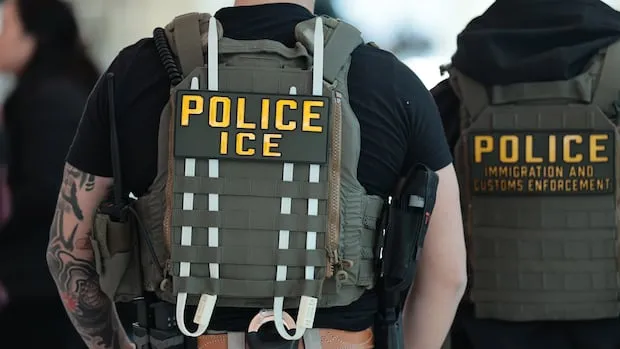
The question of how immigration enforcement will play out in Canada during the World Cup is pressing: What role will ICE play in a country where it has no jurisdiction? The answer is complex, as ICE, or Immigration and Customs Enforcement, has been involved in controversial immigration enforcement operations in the U.S. but lacks authority on Canadian soil. Despite this, the presence of ICE agents in Canada, particularly during a high-profile event like the World Cup, raises concerns about community safety and cohesion.
As Canada co-hosts the World Cup with the United States and Mexico, thirteen matches are scheduled to take place in cities like Toronto and Vancouver. ICE has five offices in Canada, including in these major cities, which has prompted local officials to voice their concerns. Toronto city council has even passed a motion opposing ICE’s presence at World Cup games, reflecting the apprehension surrounding the agency’s reputation for aggressive immigration enforcement.
According to an ICE spokesperson, “HSI special agents do not conduct operational activities in Canada, such as making arrests or executing search warrants.” However, the mere presence of ICE personnel could send a chilling message to immigrant communities, potentially discouraging attendance at public events. This is particularly concerning given that research shows 30% of Latino youth avoid daily activities due to fear of enforcement, a statistic that highlights the psychological toll of immigration policies.
ICE’s controversial history in the U.S. includes numerous lawsuits over alleged civil rights violations and aggressive tactics that have led to at least three dozen deaths in custody since January 2025. Such a backdrop raises questions about the implications of ICE’s involvement in Canada, even if it is limited to a supportive role during the World Cup. Amnesty International has reported that the U.S. team may require ICE personnel for security as they play in Canada, which could further complicate the dynamics between local communities and federal enforcement agencies.
Community leaders and activists are concerned that ICE’s presence could exacerbate existing fears among immigrant populations. The recent changes in HUD rules, which threaten eviction for mixed-status families unless they separate from undocumented members, further illustrate the precarious situation many face. The impact of enforcement near schools has been particularly traumatic, as it disrupts children’s lives and destroys community cohesion, according to research organizations.
As the World Cup approaches, the uncertainty surrounding ICE’s role in Canada remains a significant concern. Will local communities feel safe attending matches, or will the presence of ICE agents deter them? The potential for increased surveillance and enforcement could lead to heightened anxiety among immigrant populations, who already navigate a climate of fear and uncertainty.
In light of these developments, the question remains: How will Canada balance its commitment to human rights and community safety with the realities of immigration enforcement? As the tournament unfolds, the actions and presence of ICE will undoubtedly be scrutinized, and the implications for immigration policy and community relations will be closely watched. The hope is that the World Cup can be a celebration of diversity and inclusion rather than a source of fear and division.