Reaction from the field
The recent observance of Holy Thursday at the Basilica of St. John Lateran in Rome marked a significant moment for the Catholic Church, as Pope Leo XIV delivered a powerful homily during the Mass of the Lord’s Supper. This event not only commemorates Jesus’ institution of the Eucharist and the priesthood but also serves as a reminder of the core values that underpin these sacred traditions. The pope’s emphasis on self-giving love resonates deeply in a world often marked by division and strife.
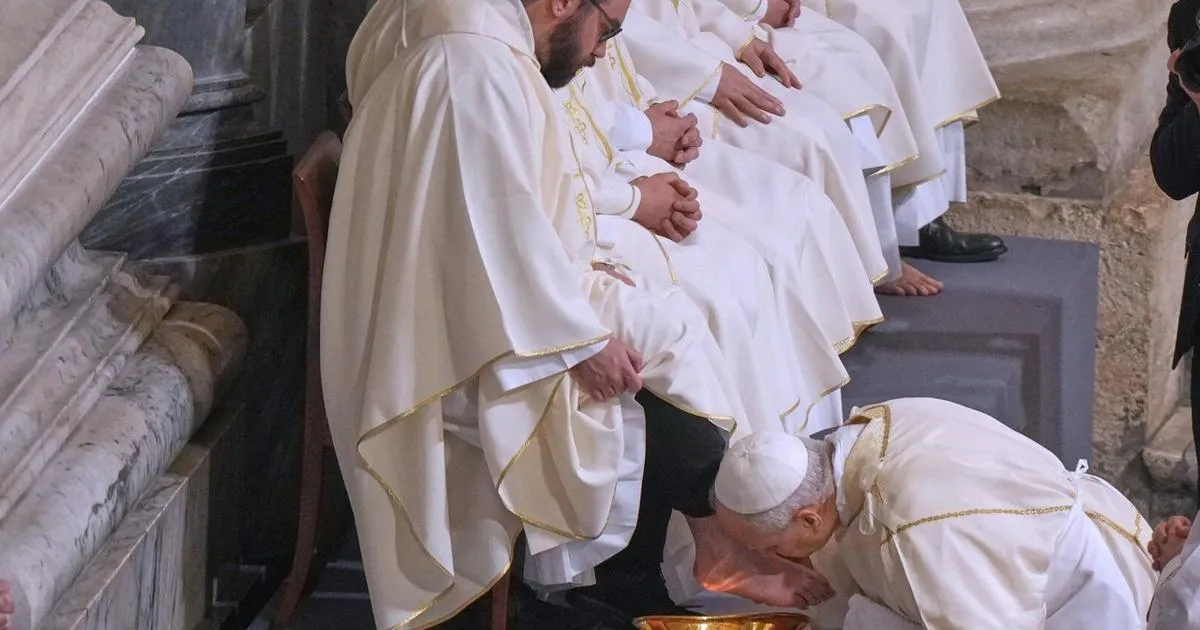
Pope Leo XIV took a notable step by reviving the traditional foot-washing ritual, washing the feet of 12 priests, a symbolic act that reflects humility and service. This ritual, which has been part of Holy Thursday observances for centuries, underscores the importance of servitude in the Christian faith. The act of washing feet is a direct reference to Jesus’ actions during the Last Supper, reinforcing the connection between the Eucharist and the priesthood.
In his homily, Pope Leo XIV articulated a vision for the Church that calls upon Catholics to embrace a mission rooted in self-giving love. He stated, “Jesus purifies not only our image of God — from the idolatry and blasphemy that have distorted it — but also our image of humanity.” This profound statement invites believers to reflect on their own roles in fostering a community that embodies love and compassion.
The pope’s message is particularly poignant in light of the historical context of Holy Thursday, which has been observed for centuries as a day of reflection and commitment to the teachings of Jesus. With the world facing numerous challenges, including social and political unrest, the call for self-giving love is more relevant than ever. Pope Leo XIV’s emphasis on the intrinsic bond between the sacraments of the Eucharist and holy orders serves as a reminder of the responsibilities that come with these sacred roles.
Moreover, the pope highlighted the necessity of embracing the risks and detachment that come with such a mission. He remarked, “In this dark hour of history, it has pleased God to send us to spread the fragrance of Christ where the stench of death reigns.” This statement not only reflects the urgency of the Church’s mission but also serves as a rallying cry for believers to engage actively in their communities.
As the Church moves forward under Pope Leo XIV’s leadership, the implications of his message will likely resonate beyond the walls of the Basilica. The revival of traditional practices, such as the foot-washing ritual, combined with a renewed focus on self-giving love, could lead to a revitalization of faith among Catholics worldwide. The pope’s call for a deeper understanding of the sacramental life may inspire many to reflect on their own commitments to service and love.
While the immediate impact of Pope Leo XIV’s homily is evident, uncertainties remain regarding how this renewed focus will shape the future of the Church. Will Catholics embrace this call to action, and how will it affect their engagement with broader societal issues? Details remain unconfirmed as the Church navigates these complex dynamics in the coming months.
In summary, Holy Thursday 2026 stands as a pivotal moment in the Catholic Church, with Pope Leo XIV’s homily serving as a beacon of hope and a call to action for believers. The emphasis on self-giving love and the revival of traditional rituals may pave the way for a more engaged and compassionate Church in a world that desperately needs it.