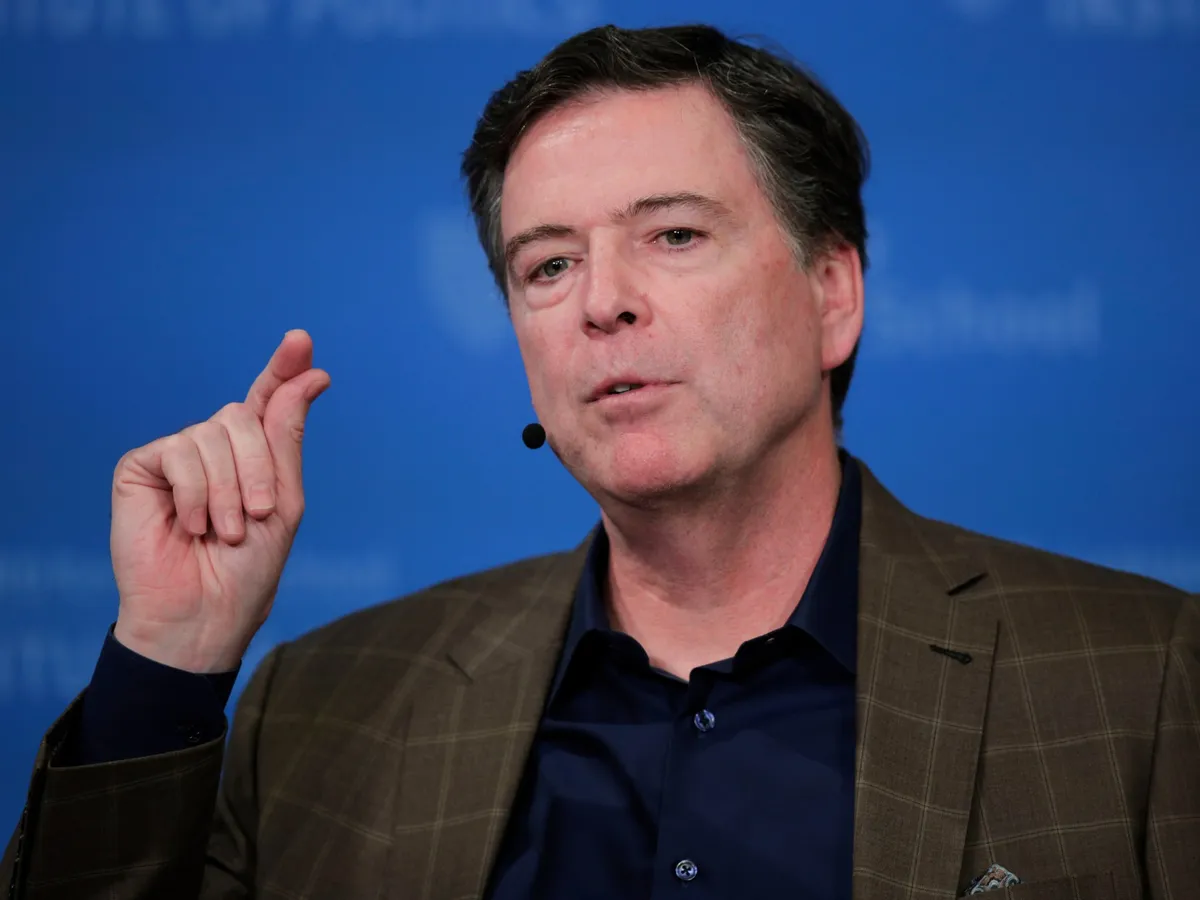
On April 29, 2026, former FBI Director James Comey turned himself in to authorities after being indicted for allegedly threatening the life of President Donald Trump through a social media post. This marks Comey’s second indictment, secured by the Trump administration’s Department of Justice.
The timeline of events leading to this moment is both intriguing and troubling. Just days before his indictment, Comey posted an Instagram photo featuring seashells arranged to spell ‘8647’—a number that references Trump as the 47th president of the United States. This seemingly innocuous post has now become a focal point for allegations of intimidation.
Comey faces two charges, each carrying a maximum penalty of five years in prison. He has publicly denied the allegations and vowed to fight them, stating, “I’m still innocent, I’m still not afraid, and I still believe in the independent federal judiciary, so let’s go.” His legal team argues that the post was merely a form of political expression.
But what does this mean for the FBI? The agency has long been scrutinized for its role in political matters. As it actively seeks recruits from diverse backgrounds and skill sets—like Special Agent Michelle, who leads an evidence response team, or Special Agent Brett, who specializes in cyber crime investigations—the integrity of the FBI’s mission hangs in the balance.
Acting Attorney General Todd Blanche emphasized that “threatening the life of the president of the United States will never be tolerated by the Department of Justice.” This statement underscores a broader issue: how far can political speech go before it crosses legal boundaries? The implications are vast for both Comey and for those who engage in similar forms of expression.
As this case unfolds, it invites deeper reflection on the nature of political discourse in America. For many within law enforcement and beyond, this incident serves as a reminder of the delicate balance between free speech and accountability.
The next steps are crucial. Comey’s legal battle could set precedents affecting future cases involving political figures and their critics. In an era where social media shapes public perception—and potentially legal outcomes—the stakes have never been higher.