Reaction from the field
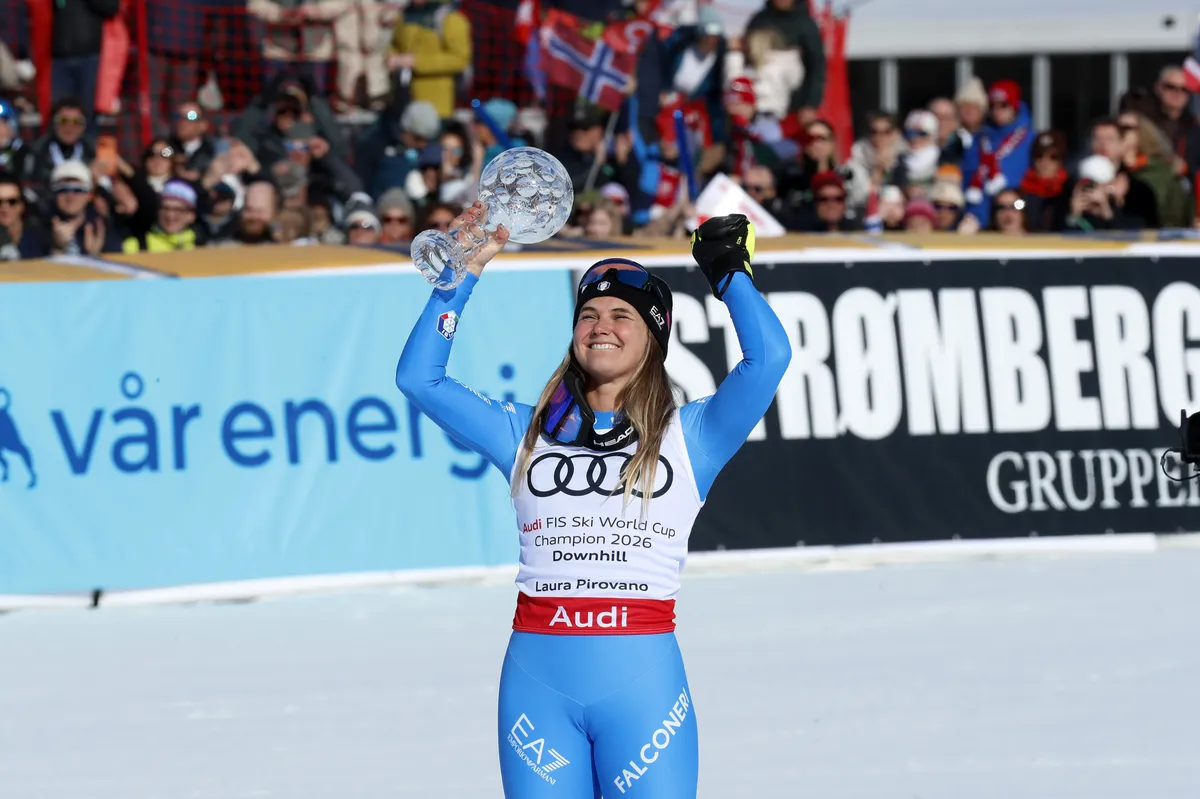
The recent triumph of Laura Pirovano in downhill skiing has sent ripples through the sport, marking a significant shift in competitive dynamics. Pirovano clinched the coveted Audi FIS World Cup Downhill Crystal Globe title, a feat that underscores her extraordinary rise in the sport. This victory is not just a personal milestone; it signals a potential transformation in the hierarchy of elite downhill skiers.
Pirovano’s journey to the top has been nothing short of remarkable. Just a month before her title win, she was ranked fourth in the standings, a position that seemed far from the glory she would soon achieve. Her recent performances, particularly her two nail-biting victories in Val di Fassa, were decided by a mere 0.01 seconds each, showcasing her ability to perform under pressure. As she hit speeds of 127.15 kmph on the final straight, Pirovano not only secured her third consecutive victory but also established herself as a formidable contender in the sport.
In a parallel narrative, Marco Odermatt has also been making headlines by securing his third consecutive downhill Crystal Globe title. The men’s World Cup downhill season is set to conclude on the Olympiabakken, a speed track originally built for the 1994 Lillehammer Olympic Winter Games. Odermatt’s consistency and skill have solidified his status as one of the sport’s leading figures, but the emergence of Pirovano adds a new layer of intrigue to the competition.
The stakes in downhill skiing have never been higher. With Pirovano’s recent performances, she has not only claimed the downhill Crystal Globe but also the FIS World Cup season points title. This achievement is particularly striking considering that she had never finished on a World Cup podium or ranked higher than sixth in a Globe race prior to this season. Her transformation from an underdog to a champion illustrates the unpredictable nature of competitive sports.
As the season progresses, the focus will shift to how Pirovano and her competitors, including Emma Aicher and Dominik Paris, will adapt to the increasing pressure. The upcoming races will be crucial, especially with the strongest skiers expected to run back-to-back between bibs 6–15, a section of the race deemed decisive. The anticipation surrounding these events is palpable, as fans and analysts alike speculate on how this new rivalry will unfold.
While Pirovano’s current form suggests she may dominate the upcoming races, uncertainties linger regarding the consistency of her performance. Will she maintain her edge against seasoned competitors like Aicher and Paris? Details remain unconfirmed, but the potential for thrilling showdowns is undeniable.
In summary, Laura Pirovano’s ascent in downhill skiing has not only redefined her career but also reshaped the competitive landscape of the sport. As she continues to push boundaries, the implications of her success will resonate throughout the skiing community, inspiring a new generation of athletes to chase their dreams on the slopes.