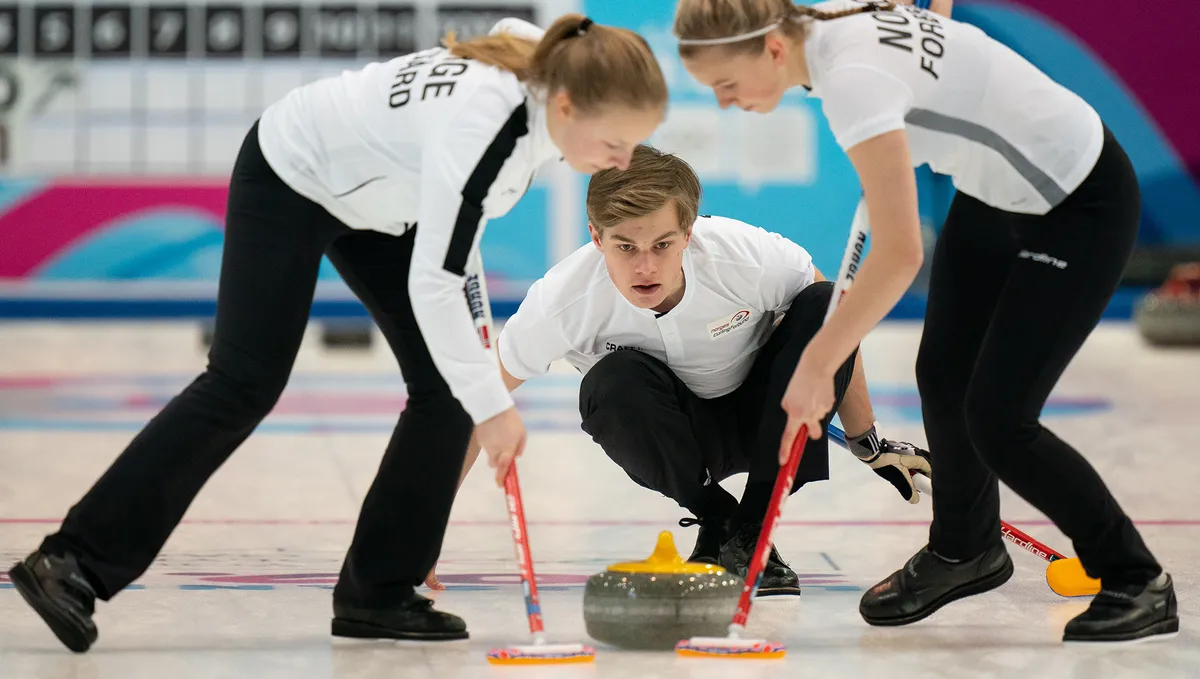
As the 2026 Canadian Masters Championship approaches, set to take place at the Grande Prairie Curling Centre on April 9, the curling community is embroiled in a controversy surrounding double-touch infractions. This debate, which began during the Milano-Cortina Olympics in February, has resurfaced with renewed vigor, particularly following a video demonstration by Oskar Eriksson that showcased a double-touch infraction.
In the video, Eriksson illustrated the nuances of the double-touch rule, which has become a focal point of discussion among players and officials alike. The controversy intensified when Marc Kennedy was accused of breaking the rules by allegedly touching the granite of the stone after its release. Such actions, while seemingly minor, can have significant implications in the precision-driven sport of curling.
As the championship draws near, 22 teams from across Canada, including notable rinks like Kurt Balderston’s on the men’s side and Glenys Bakker’s for the ladies, are preparing to compete. The draw times for this prestigious event are set for 10 a.m., 2:30 p.m., and 7:30 p.m. daily, promising an exciting showcase of talent.
Eriksson, reflecting on the intricacies of the sport, stated, “At our level, just altering a stone by five centimetres on the other side, knowing how little you need to do to make that correction, is also a skill.” His comments underscore the delicate balance of skill and strategy that defines curling.
Despite the controversy, Eugene Hritzuk, another prominent figure in the curling community, defended the integrity of the game, asserting, “I don’t think there’s anything in that video that supports the idea that anything very wrong happened.” He emphasized that curling is fundamentally a gentlemen’s game, suggesting that the spirit of fair play should prevail.
The stakes are high as teams prepare for the championship, especially after Team Canada, skipped by Matt Dunstone, faced a tough loss against Sweden, scoring 6 points to Sweden’s 9 in the men’s world curling championship. This defeat adds pressure on the Canadian teams to perform well in the upcoming Masters.
The double-touch debate is not new; it has been examined in the past, but its resurgence highlights the ongoing challenges within the sport. As teams gear up for the Masters, the implications of the double-touch rule could influence strategies and outcomes.
As the curling community watches closely, the resolution of this controversy could shape the narrative of the championship and the broader discourse surrounding the sport. With the event just around the corner, all eyes will be on the ice in Grande Prairie.