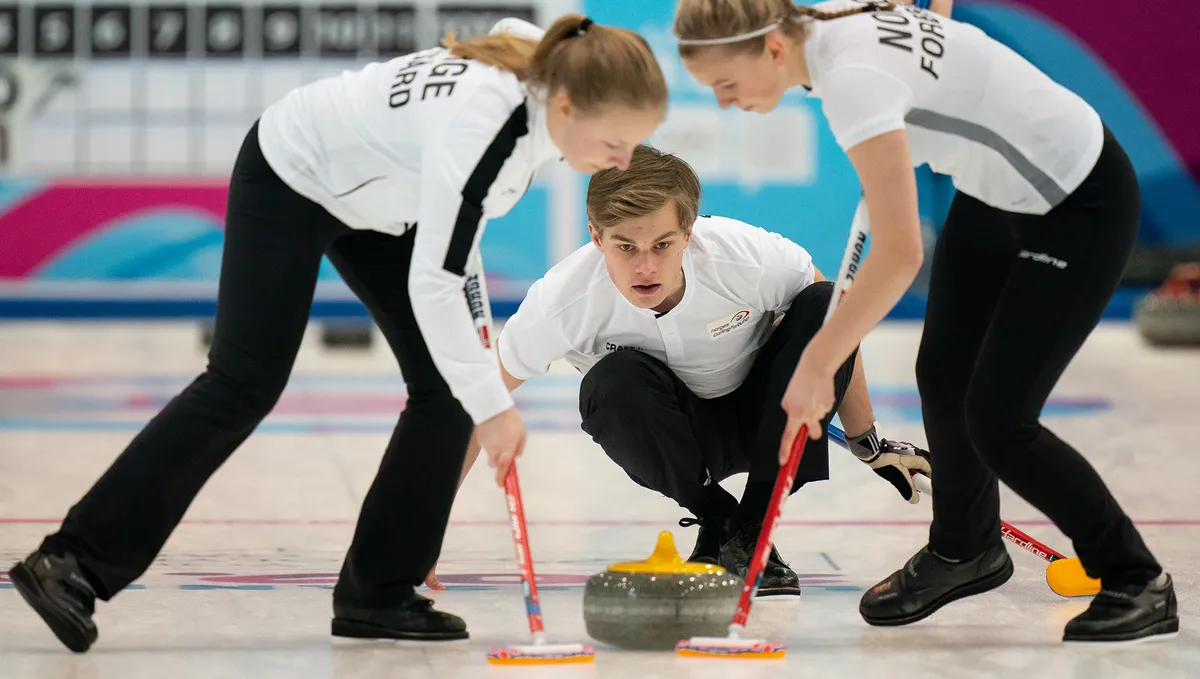
As the 2026 Canadian Masters Championship unfolds at the Grande Prairie Curling Centre, the curling community finds itself embroiled in a controversy that began during the Milano-Cortina Olympics in February. Oskar Eriksson’s demonstration of a double-touch infraction has brought the issue to the forefront, raising questions about the integrity of the sport.
On April 9, 2026, the championship features 22 teams from across Canada, including notable rinks such as Kurt Balderston’s team representing Alberta on the men’s side and Glenys Bakker’s rink for the ladies. Draw times are set for 10 a.m., 2:30 p.m., and 7:30 p.m. daily, providing ample opportunity for fans and players alike to engage with the competition.
The double-touch controversy intensified when Marc Kennedy was accused of breaking the rules by touching the granite of the stone after its release. This incident has prompted discussions about the nuances of curling rules and the skill involved in executing precise shots. Eriksson remarked, “At our level, just altering a stone by five centimetres on the other side, knowing how little you need to do to make that correction, is also a skill.” His comments highlight the fine line between skill and rule violations in the sport.
Despite the accusations, Eugene Hritzuk defended the integrity of the game, stating, “I don’t think there’s anything in that video that supports the idea that anything very wrong happened.” He further emphasized the spirit of curling, asserting, “Curling is a gentlemen’s game.” This perspective resonates with many in the curling community who value sportsmanship and fair play.
The current state of affairs sees the Canadian team, skipped by Matt Dunstone, facing challenges as they recently lost 9-6 to Sweden in the men’s world curling championship. This loss adds pressure on the Canadian teams competing in the Masters Championship, as they aim to restore national pride amidst the ongoing controversy.
The debate over double-touching is not new; it has been examined in the past and continues to evoke strong opinions among players and fans. As the championship progresses, the implications of this controversy will likely influence discussions around rule enforcement and the future of curling.
As the curling world watches closely, the outcome of the Masters Championship may serve as a pivotal moment for the sport, potentially leading to changes in how rules are interpreted and enforced. For those involved, the stakes are high, and the integrity of curling hangs in the balance.