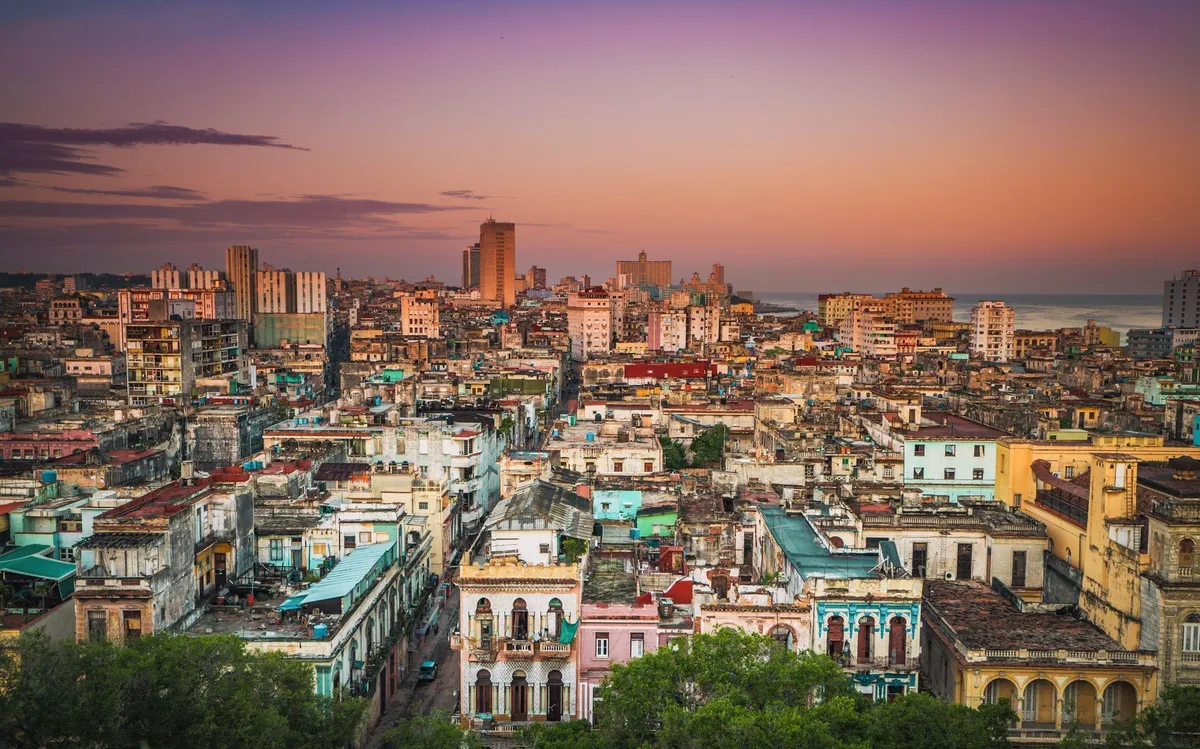
Cuba’s resilience amid severe economic challenges and US sanctions highlights a complex interplay of national sovereignty and historical memory. On May 1, 2026, Cuban electrical and petroleum workers marched in Havana to celebrate International Workers’ Day, showcasing their determination to withstand external pressures.
The Cuban government has pledged to stand firm against growing US pressure, which has intensified under the Trump administration. With further sanctions targeting those involved in the security services, the impact on the Cuban economy is profound. A US energy blockade has contributed to widespread energy blackouts, crippling daily life.
The statistics tell a grim story: infant mortality has risen while life expectancy has fallen due to the ongoing crisis. Today, Cuba faces a ‘polycrisis’ — overlapping emergencies that include economic decline and severe demographic loss. It’s a stark reminder that the predictions of regime change in Cuba have been wrong for 67 years.
Cuba’s leadership under Miguel Diaz-Canel continues to resist fully embracing the economic models seen in China or Vietnam, driven by concerns over inequality. As noted by Daniel J. Fernández-Guevara, “National sovereignty is a very important thing in Cuba.” This sentiment resonates deeply with many Cubans who view their historical struggles as integral to their identity.
Yet, the situation is precarious. The next steps for Cuba remain uncertain as it grapples with these multifaceted crises. Yunier Merino Reyes aptly stated, “We are living through difficult times.” But amid these challenges, Milagros Morales emphasized that “this people does not give up,” highlighting an enduring spirit of defiance.
As Cuba navigates its future amid ongoing turmoil, it becomes increasingly clear that its resilience is rooted not just in political ideology but also in a collective historical consciousness. The interplay between national sovereignty and external pressures will continue to shape Cuba’s path forward.