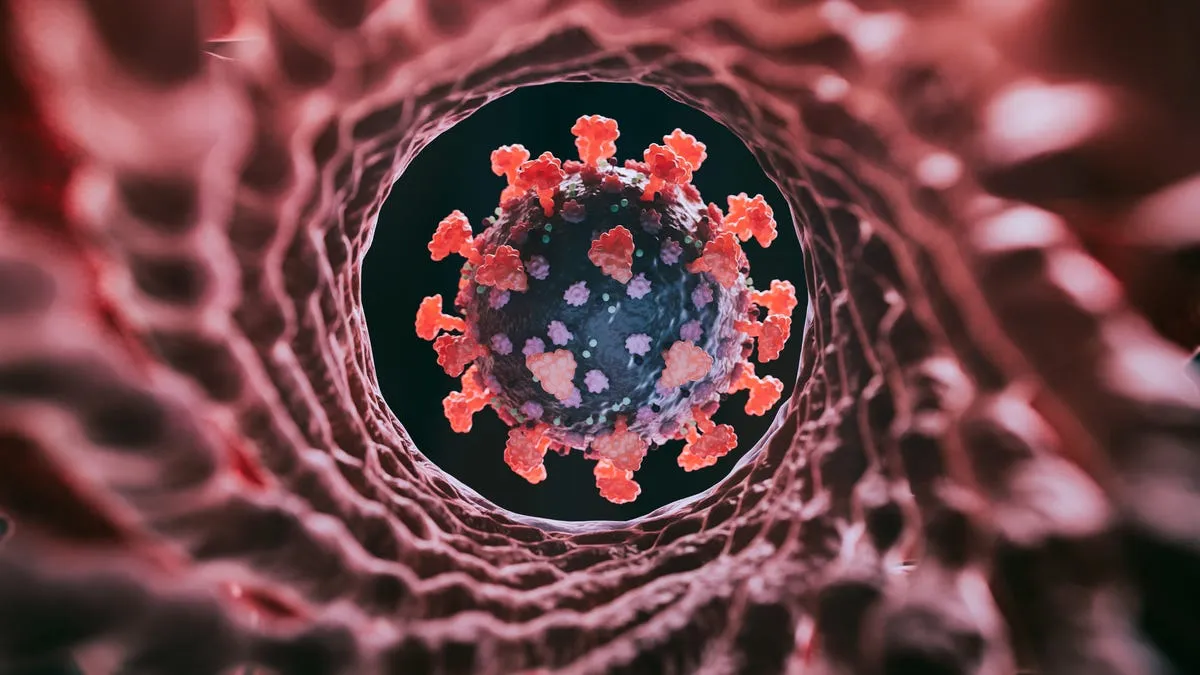
The emergence of the cicada COVID variant, officially designated BA.3.2, is causing a significant rise in cases across the United States and globally. This variant, first detected in a traveler arriving in the U.S. in June 2025, has raised alarms due to its high mutation rate, boasting between 70 and 75 mutations. As of March 2026, BA.3.2 accounts for approximately 30% of COVID-19 sequences in Germany and several Northern European countries.
Since its first U.S. diagnosis in January 2026, BA.3.2 has spread to at least 25 states, with detection in 3.7% of wastewater samples as of mid-March. The World Health Organization classified BA.3.2 as a ‘variant under monitoring’ in December 2025, indicating the global health community’s concern regarding its potential impact.
Experts emphasize the importance of monitoring BA.3.2 to understand its capability to evade immunity from previous infections or vaccinations. The CDC noted, “Monitoring the spread of BA.3.2 provides valuable information about the potential for this new SARS-CoV-2 lineage to evade immunity from a previous infection or vaccination.” This highlights the ongoing challenges in managing the pandemic as new variants emerge.
Despite the alarming statistics, some experts suggest that the variant has not yet led to a significant increase in severe disease. Andrew Pekosz, Ph.D., remarked, “It looks scary on paper, but it hasn’t really made a big impact in terms of disease in most places yet.” This sentiment underscores the complexity of assessing the variant’s actual threat level.
However, the situation is precarious. Dr. Robert H. Hopkins, Jr. warned that low vaccination rates and insufficient public health measures leave the population vulnerable to a potential surge. Current COVID vaccines are expected to continue providing protection against severe disease from BA.3.2, but the effectiveness of these vaccines against the variant is still under investigation.
As of now, BA.3.2 has been reported in at least 23 countries, with 132 sites where it was detected in wastewater samples. The variant’s rapid spread raises questions about its future trajectory and the public health response required to mitigate its impact.
Details remain unconfirmed regarding the potential for BA.3.2 to cause a surge in the U.S. and the ongoing studies into vaccine effectiveness against this variant. The coming weeks will be crucial in determining how this new variant will shape the landscape of the ongoing pandemic.