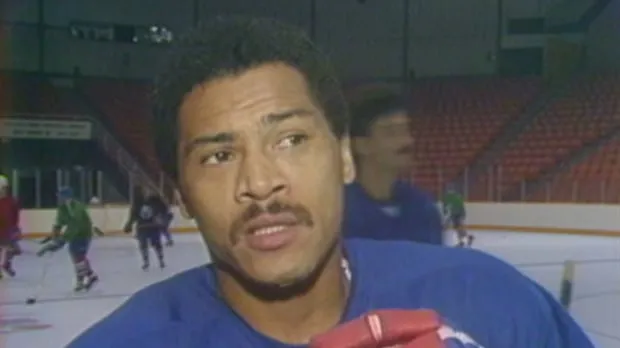
“He changed a lot of young people’s lives, especially when he was coaching in Amherst,” remarked Jim Bottomley, reflecting on the profound influence Bill Riley had on the community and the sport of hockey. Riley, who passed away at the age of 75, was not only a talented player but also a significant figure in promoting diversity within the game. Born in 1950 in Amherst, Nova Scotia, he became the first African Nova Scotian to play in the NHL, paving the way for future generations of players from diverse backgrounds.
Riley’s journey in professional hockey began with the Washington Capitals, where he played from 1976 to 1979, before moving to the Winnipeg Jets for the 1979-80 season. Over his NHL career, he scored 31 goals and provided 30 assists in 139 games, showcasing his skills on the ice. However, his legacy extends far beyond his statistics. As the third Black player in the NHL, he faced significant challenges, including prejudice, which only fueled his determination to excel.
In addition to his NHL career, Riley made a mark in the American Hockey League (AHL) as the captain of the New Brunswick Hawks, leading the team to a Calder Cup victory in 1982. His leadership and commitment to the sport earned him recognition, culminating in his induction into the Nova Scotia Sport Hall of Fame in 1998. This accolade not only honored his achievements but also highlighted his role as a trailblazer in hockey.
Riley’s influence continued long after his playing days. In 2022, Hockey Nova Scotia named an award and scholarship in his honor, ensuring that his legacy would inspire young athletes for years to come. Furthermore, his #8 jersey was retired by the Amherst Ramblers in 2013, a testament to his lasting impact on the local hockey community.
Mark McFarlane, a former teammate, expressed the sentiment shared by many, stating, “We were so proud of him. He was bigger than life to us.” This pride was not only rooted in Riley’s accomplishments on the ice but also in his role as a mentor and coach. He dedicated time to coaching the Moncton Wildcats and the Amherst Ramblers, where he continued to inspire young players and instill in them the values of hard work and perseverance.
As the Washington Capitals noted, “Bill was a true trailblazer in our game, becoming one of the first Black players to play in the NHL.” His journey was marked by challenges, yet he remained steadfast in his commitment to the sport and his community. His story serves as a reminder of the importance of representation in sports and the impact that one individual can have on countless lives.
Looking ahead, the hockey community continues to honor Riley’s legacy. The recent awarding of the MHL’s Moe Bent Builders Award in 2024 further cements his status as a pivotal figure in the sport. As discussions about diversity and inclusion in hockey evolve, Riley’s contributions will undoubtedly be a focal point in these conversations.
In a world where sports often reflect broader societal issues, Bill Riley’s life and career stand as a beacon of hope and inspiration. His story is one of resilience, determination, and the power of sports to change lives. As the hockey community remembers him, it is clear that his legacy will continue to inspire future generations of players and fans alike.