Before the recent developments surrounding Benjamin Netanyahu, expectations regarding Israel’s military and diplomatic posture were relatively stable. Netanyahu’s government had been navigating a complex landscape of regional integration and normalization of relations with Arab neighbors, focusing on dialogue and strategic alliances. However, the backdrop of ongoing tensions with Iran loomed large, with Netanyahu often emphasizing Israel’s military strength as a deterrent against existential threats.
The decisive moment came as Netanyahu met with Holocaust survivors ahead of Holocaust Remembrance Day. During this poignant meeting, he made a striking comparison between Iran and Nazi Germany, stating, “If we had not acted, if we had not taken our fate into our own hands in the independent State of Israel, with the Israel Defense Forces and our security arms, the names Isfahan, Natanz, Fordow, and Bushehr would be remembered like Auschwitz, Majdanek, and Sobibor.” This statement not only underscored the gravity of the threat he perceives from Iran but also marked a significant rhetorical shift in Israel’s approach to its regional adversaries.
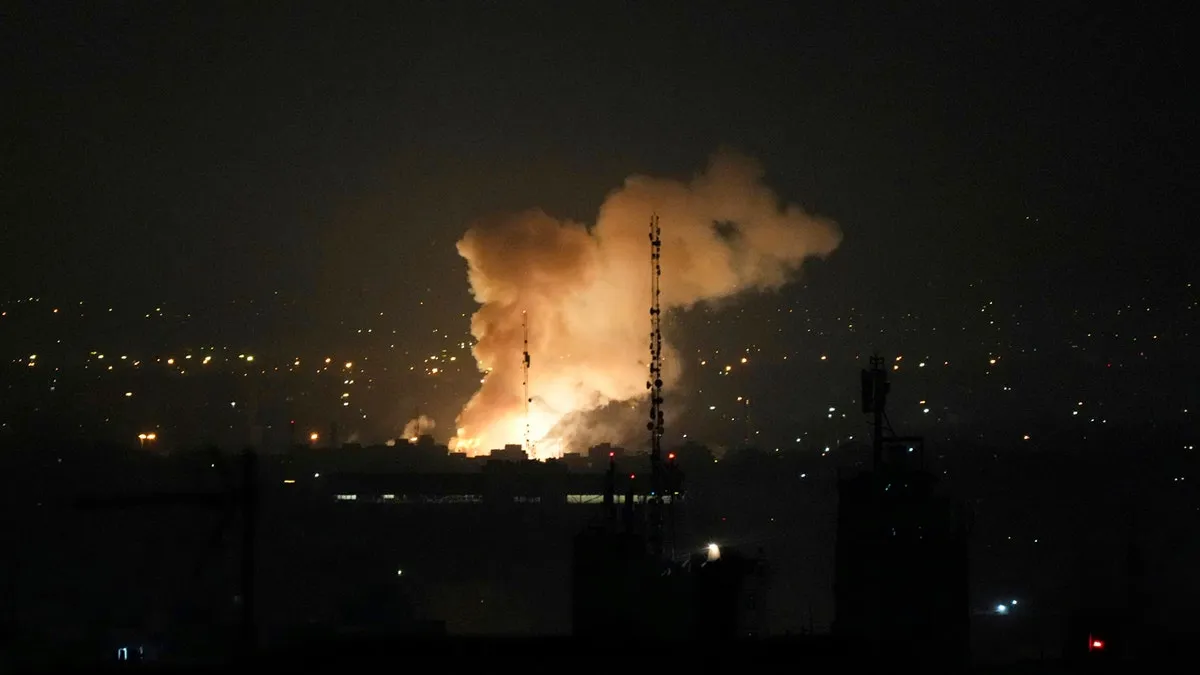
Netanyahu’s remarks have had immediate repercussions for the parties involved. By framing Iran in such stark historical terms, he has galvanized support among hardline factions within Israel who advocate for a more aggressive military posture. Furthermore, his assertion that Israel’s military strength has prevented another Holocaust resonates deeply within the national consciousness, reinforcing a narrative of survival and resilience. The Israel Defense Forces (IDF) are reportedly prepared for a possible resumption of fighting with Iran, indicating a readiness to escalate military operations if deemed necessary.
Experts have weighed in on the implications of Netanyahu’s statements. Analysts suggest that this shift in rhetoric could lead to increased tensions not only between Israel and Iran but also within the broader geopolitical landscape of the Middle East. Netanyahu’s vision of Israel as a “regional superpower” and his ambition to create a hexagon of alliances around the region reflect a strategic pivot that could redefine Israel’s foreign policy. However, the effectiveness of this approach remains to be seen, especially in light of the challenges posed by Iran’s nuclear ambitions and its influence in neighboring countries.
Moreover, Netanyahu’s government is currently discussing scenarios for a potential resumption of fighting with Iran, indicating a proactive stance rather than a reactive one. This approach aligns with his belief that negotiations have historically yielded little progress, as he stated, “We have learned from this war that negotiations change nothing – in the end, the decision lies with Donald Trump.” This reference to the former U.S. president highlights the intertwined nature of U.S. foreign policy and Israeli security concerns, suggesting that Netanyahu may be banking on external support to bolster his military strategy.
As Netanyahu continues to navigate these complex dynamics, the significance and durability of the two-week pause in the U.S. and Israel’s war on Iran remain unclear. Details remain unconfirmed, leaving room for speculation about the future trajectory of military engagements and diplomatic efforts in the region. The juxtaposition of historical memory with contemporary threats serves as a powerful tool in Netanyahu’s rhetoric, but it also raises questions about the long-term implications of such a confrontational stance.
In summary, Benjamin Netanyahu’s recent statements and actions reflect a marked shift in Israel’s military and diplomatic strategy regarding Iran. By invoking the Holocaust in his rhetoric, he has not only reinforced the urgency of the threat posed by Iran but has also positioned Israel for a potentially more aggressive military posture. As the situation unfolds, the international community will be closely watching how these developments impact regional stability and the broader geopolitical landscape.