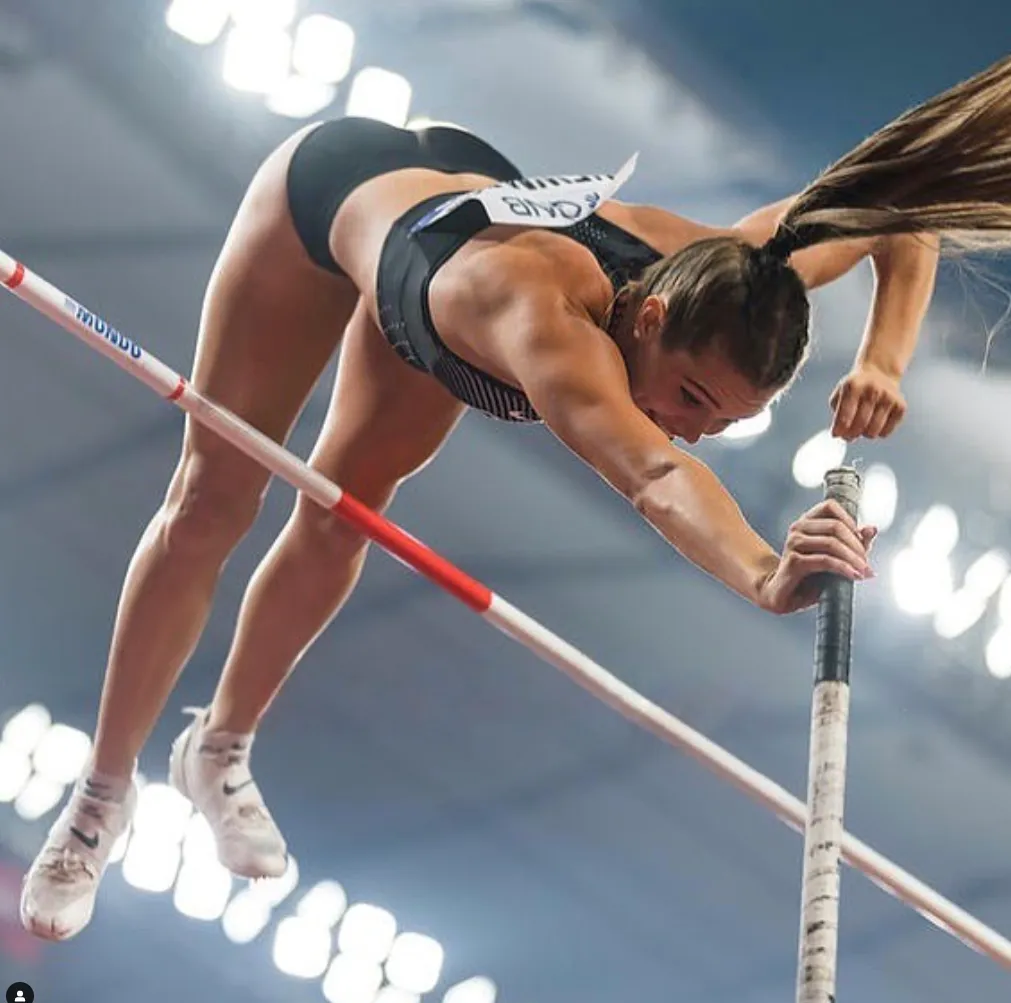
Alysha Newman, a prominent figure in pole vaulting, has received a 20-month ban for failing to comply with doping controls, despite having announced the end of her competitive career. This decision by the Athletics Integrity Unit (AIU) raises questions about the implications of such penalties on athletes who have already stepped away from their sport.
Before this ruling, Newman was celebrated for her accomplishments, including a bronze medal at the 2024 Paris Olympics. Her reputation was built on notable performances at prestigious events like the Commonwealth Games and Pan American Games.
However, the decisive moment came when she was unavailable for an unannounced doping control in February last year, followed by two more failures in August. According to anti-doping regulations, three whereabouts failures within a 12-month period constitute a violation.
The direct effects are multifaceted. For Newman, who is now 31 years old, this ban will last until August 2027—long after she has retired from competition. The AIU acknowledged her retirement decision, yet the suspension still looms over her legacy.
Newman’s track record includes competing in two World Championships finals and earning gold and bronze medals at the Commonwealth Games. Her achievements have inspired many young athletes in Canada.
Experts in sports law often debate the fairness of punishing athletes who have already left their sport. Some argue that such bans can serve as a deterrent for current competitors. Others believe that they unjustly tarnish the legacy of retired athletes.
Alysha Newman stated that she had to leave immediately to participate in the filming of a television game show, which contributed to her missed tests. This highlights how external commitments can complicate an athlete’s compliance with doping regulations.
The AIU’s decision reflects a broader commitment to maintaining integrity within athletics—an essential goal but one that must balance fairness with context. As more athletes navigate complex lifestyles beyond competitive sports, these cases will likely continue to arise.
With Newman’s suspension set to expire in 2027, it remains uncertain how this will affect her post-athletic career and public perception. The landscape of athletics is evolving, and so too must the rules that govern it.