European football’s stance against FIFA proposals
UEFA and its 55 member associations have collectively declared that they will not participate in FIFA competitions if proposals to sell stakes in major tournaments to private investors are approved. This decision was made following a vote on Thursday, where the European football governing body took a definitive stance against what it describes as a significant threat to the sport.
The boycott would encompass all FIFA competitions, including both the men’s and women’s World Cups, as well as the Club World Cup. This action would be triggered should FIFA president Gianni Infantino’s proposals be voted through by member associations globally. Such a boycott would mean a quarter of FIFA’s members, including some of the world’s most prominent footballing nations, would refuse to participate.
Concerns over private equity and governance
Laura McAllister, UEFA vice-president, has accused FIFA of attempting to coerce member associations into accepting its private equity plan. She described FIFA’s approach as a form of financial blackmail, noting the tight deadline given to national associations to consider such a significant proposal. McAllister, who also serves on UEFA’s executive committee, emphasized that the core issue is the attempt to sell off parts of football to private equity, which she views as an existential threat to the game.
According to McAllister, private equity entities operate with different objectives and motivations compared to those who are custodians of the sport. She stated that once parts of football’s “crown jewels” are sold, commercial return becomes a permanent obligation, and investor expectations exert daily pressure. This could lead to decisions regarding the international calendar, competition formats, and the future of football being driven by shareholder interests rather than the best interests of the game itself.
UEFA has unequivocally rejected the proposal to transfer ownership interests in the World Cup and other FIFA competitions to private investors. The organization asserts that the World Cup should not be treated as an investment product, but rather as a sporting legacy built by generations of players, national teams, and supporters. They argue that no part of it should ever be surrendered to private investors, maintaining that the World Cup is not for sale.
The European body also criticized the secretive nature in which the proposal was conceived and brought to the brink of approval without meaningful consultation. UEFA views this as a profound failure of leadership and an abdication of FIFA’s duty as the custodian of world football. They believe that presenting national associations with an ultimatum to accept the “irreversible capture” of football’s greatest competitions constitutes governance by intimidation, which they deem unworthy of an institution entrusted with the global game.
Impact and future implications
The unanimous decision by UEFA’s 55 member associations reflects a strong sense of unity regarding the perceived threat. McAllister expressed optimism that the boycotts would not come to pass, believing that Europe’s powerful and categorical stance might encourage other confederations to follow suit, thereby defeating the proposal. She highlighted that a World Cup without European nations would not truly be a World Cup, underscoring the significant role European football plays globally.
McAllister also urged other governing bodies to resist the controversial plans. She mentioned that other confederations, such as those in Asia and Central and North America, have already voiced their concerns. The UEFA vice-president hopes that the strong position taken by Europe will incentivize the rest of the football world to oppose what she termed an “awful proposal.”
The potential boycott raises questions for upcoming tournaments. For instance, the UK’s joint bid for the Women’s World Cup in 2035, involving England, Northern Ireland, Scotland, and Wales, is currently the only valid submission for the 48-team tournament. Confirmation of host status is expected in November. Prior to that, all four nations are set to participate in play-offs for the 2027 World Cup.
UEFA has stated that its national teams will not participate in any FIFA competition as long as these proposals remain active, unless they are abandoned entirely and binding assurances are given that FIFA will never again open its governance or competitions to private ownership. The organization emphasized its absolute determination to oppose these plans, asserting that some things are simply too important to sell and that the FIFA World Cup belongs to football.
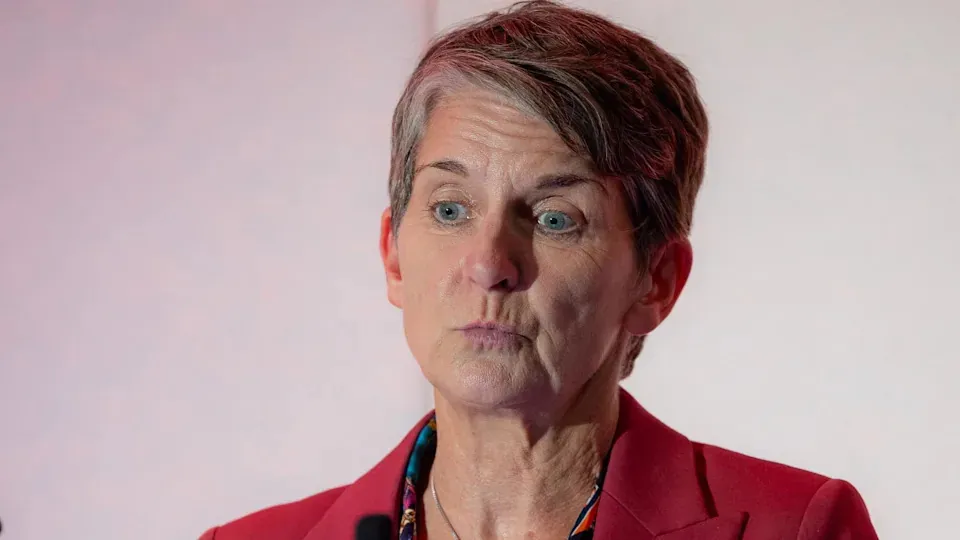
McAllister, a former captain of the Wales women’s football team, believes that Europe holds most of the cards in terms of how the World Cup can operate and its financial viability. She posed the rhetorical question of imagining a Women’s World Cup without major European teams like Spain, England, France, or Germany, noting that the same would apply to the men’s tournament. She also accused FIFA and Infantino of being primarily motivated by money, citing other interventions that have caused concern within UEFA, such as the overturning of a red card and the so-called FIFA peace prize.
The decision was made at an emergency virtual meeting held on Thursday.
Source: ca.sports.yahoo.com